2021年2月22日 星期一

What Is a Thermistor?

 The word thermistor comes from "thermal" and "resistor". A thermistor is a resistance whose resistance depends on temperature. This is a resistance thermometer. They are made of metal oxides molded into beads, plates, or cylinders and then sealed with epoxy resin or glass.

Thermistors do not work well at extreme temperatures, but they are very good at measuring the temperature at a particular point. They are very accurate when they are used over a limited temperature range (i.e., within 50°C of the target temperature); The range depends on the base resistance.

Thermistors are easy to use, relatively cheap, and durable. They are commonly used in digital thermometers, in vehicles for measuring oil and coolant temperatures, and in household appliances such as ovens and refrigerators, and are preferred for applications that require heating or cooling protection circuitry to ensure safe operation.

Thermistors are built into more complex applications, such as laser stability detectors, optical modules, and charge-coupled devices. For example, a 10 k Ω thermistor is built-in standard resistance in laser packaging.

Thermistors are a type of semiconductor, which means they have a higher resistance than conductive materials, but a lower resistance than insulating materials. The relationship between the temperature of a thermistor and its resistance depends to a great extent on the materials of which it is made. Manufacturers usually determine this attribute with great precision because it is the main characteristic of interest to thermistor buyers.

Thermistors are composed of metal oxides, adhesives, and stabilizers that are pressed into wafers then cut to chip size and retained in the form of disks or other shapes. The precise proportions of composites determine their resistance/temperature "curves". Manufacturers usually control this ratio with great precision because it determines the way the thermistor works.

The thermistor is a very accurate and cost-effective temperature measurement sensor. There are two types, NTC (negative temperature coefficient) and PTC (positive temperature coefficient), which are commonly used to measure temperature.

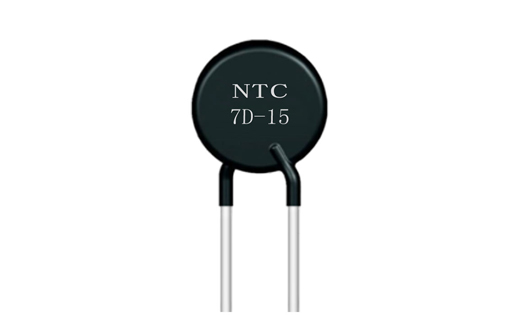
Thermistors come in two types: those with a negative temperature coefficient (NTC thermistors) and those with a positive temperature coefficient (PTC thermistors). The resistance of the NTC thermistor decreases with the increase of temperature, while that of the PTC thermistor increases with the increase of temperature. Temperature measurements are usually made using only NTC thermistors.
NTC Thermistors

Thermistors consist of materials with known resistance. As the temperature rises, the resistance of the NTC thermistor increases in a non-linear manner, following a specific "curve". The shape of the resistance relative to temperature is determined by the properties of the materials that make up the thermistor.

Thermistors have a variety of basic resistance and resistance vs temperature curve. Low-temperature applications (55 - to 70 ° C) often use low resistance of the thermistor Ω) 2252 to 10000. High-temperature applications typically use high resistance of thermistor (more than 10000 Ω). Some materials have better stability than others. Resistance is usually specified at 25°C (77°F). The thermistor is accurate to approximately ±0.2°C over its specified temperature range. They are usually durable, long-lasting, and inexpensive.

Thermistors are usually chosen for applications requiring robustness, reliability, and stability. They are ideal for use in extreme conditions or in the presence of electronic noise. They come in a variety of shapes: the ideal shape for a particular application depends on whether the thermistor is surface-mounted or embedded in the system, and on the type of material being tested.

Thermistors with epoxy coatings can be used at lower temperatures (typically -50 to 150°C (-58 to 316°F)). Thermistors can also be used for glass coatings to be used at higher temperatures [typically -50 to 300°C (-58 to 572°F)]. These coatings protect thermistors and their connectors from moisture, corrosion, and mechanical stress.

2021年2月14日 星期日

222M 300V safety capacitors

 222M 300V safety capacitors     ceramic capacitor manufacturers     capacitor manufacturers


Product Features

1. High-k dielectric ceramic dielectric, encapsulated with flame retardant epoxy resin

2. Pass the safety certificates of VDE / ENEC / IEC / UL / CSA / KC / CQC


Application Area :

1.Apply to power circuits of electronic equipment include noise suppression circuit, antenna coupling and bypass circuit.

2.Apply to all kinds of small household appliances control boards, power filters, high-frequency AC loads, switching power supplies, electronic ballasts, LED energy-saving lamps, etc.


Matters Needing Attention:

1. Do not store the ceramic disc capacitor in corrosive gas, especially in the presence of chlorine, sulfur, acid, alkali, salt, moisture, etc.

2. The storage temperature and the relative humidity should not be too low or too high.


We Are Provide Safety Capacitor and Cheap Resistors and Resistor China, If You Need, Welcome To Contact Us To Know More.


Our website: www.jeccapacitor.com


https://www.jeccapacitor.com/safety-capacitor/222m-300v-safety-ceramic-capacitor-y2-type.html

2021年2月6日 星期六

103M 500V safety capacitor multilayer ceramic capacitor manufacturers

 103M 500V safety capacitor     multilayer ceramic capacitor manufacturers    motor capacitors for sale


New Safety Capacitors Features

1. High-k dielectric ceramic dielectric, encapsulated with flame retardant epoxy resin

2. Pass the safety certificates of VDE / ENEC / IEC / UL / CSA / KC / CQC


Electrical characteristics:

Technical requirements reference Standard

IEC 60384-14 ; EN 60384-14 ; IEC UL60384 ; K 60384

Certification mark

VDE / ENEC / IEC / UL / CSA / KC / CQC

Class ;  Rated Voltage(UR)

X1 / Y1/Y2 ; 400VAC / 300VAC/500VAC

Capacitance Range

10pF to 10000pF

Withstand voltage

4000VAC for 1min/2000VAC for 1min/1800VAC for 1min

Capacitance Tolerance

Y5P±10%(K ) ; Y5U,Y5V±20%(M) measured at 25℃,1Vrms,1KHz

Dissipation Factor (tgδ)

Y5P,Y5U tgδ≤2.5% ; Y5V tgδ≤5% measured at 25℃,1Vrms,1KHz

Insulation Resistance(IR)

IR≥10000MΩ,1min,100VDC

Operating Temperature

-40℃ to +85℃ ; -40℃ to +125℃

Temperature Characteristic

Y5P,Y5U,Y5V

Flame Retardant Epoxy Resin

UL94-V0


We Are Provide Safety Capacitor and Cheap Resistors and Resistor China, If You Need, Welcome To Contact Us To Know More.


Our website: www.jeccapacitor.com

2021年1月31日 星期日

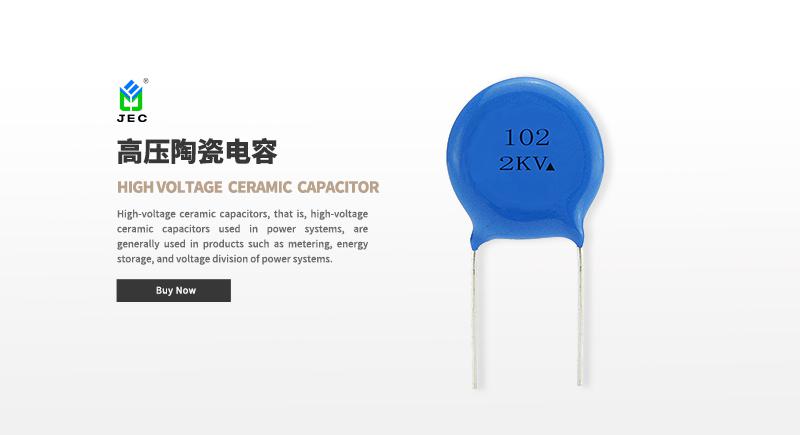
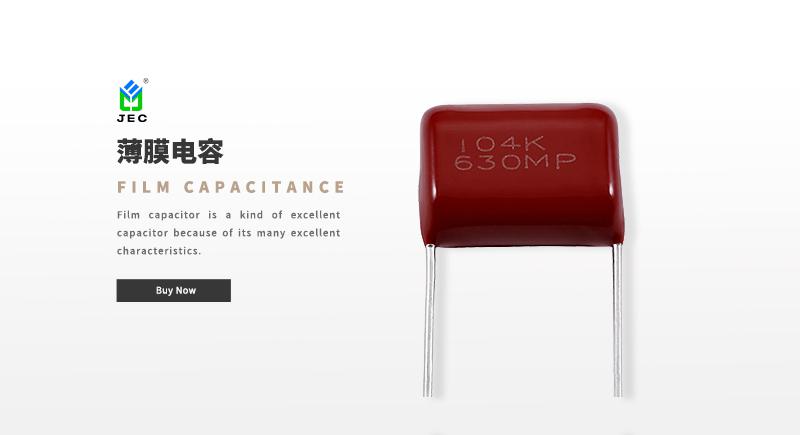
The Advantages of High Voltage Ceramic Capacitors compared with film capacitor

 High voltage proof. Voltage Proof Test is to test whether the voltage at both ends of the capacitor lead can reach its corresponding withstand voltage standard and specified standard. Normally for Film capacitors, the voltage proof is 1.2UR, while high voltage ceramic capacitors can reach 2UR.

The Advantages of High Voltage Ceramic Capacitors compared with film capacitor

Smaller capacity. Compared with a film capacitor, a high voltage ceramic capacitor can achieve a small capacity. For regular models of film capacitor CBB21, the smallest capacity is 0.1uf, while high voltage ceramic capacitors can achieve 0.5pf and 1pf.

Smaller pitch. High voltage ceramic voltage can achieve a small pitch. For film capacitors, the pitches for regular models are as follow, 7.5mm, 10mm, 15mm, 20mm, 22.5mm, 27.5mm. The pitch is normally quite larger, while the pitch of high voltage ceramic capacitors can be 2.5mm, 5mm, 7.5mm.

The Advantages of High Voltage Ceramic Capacitors compared with film capacitor

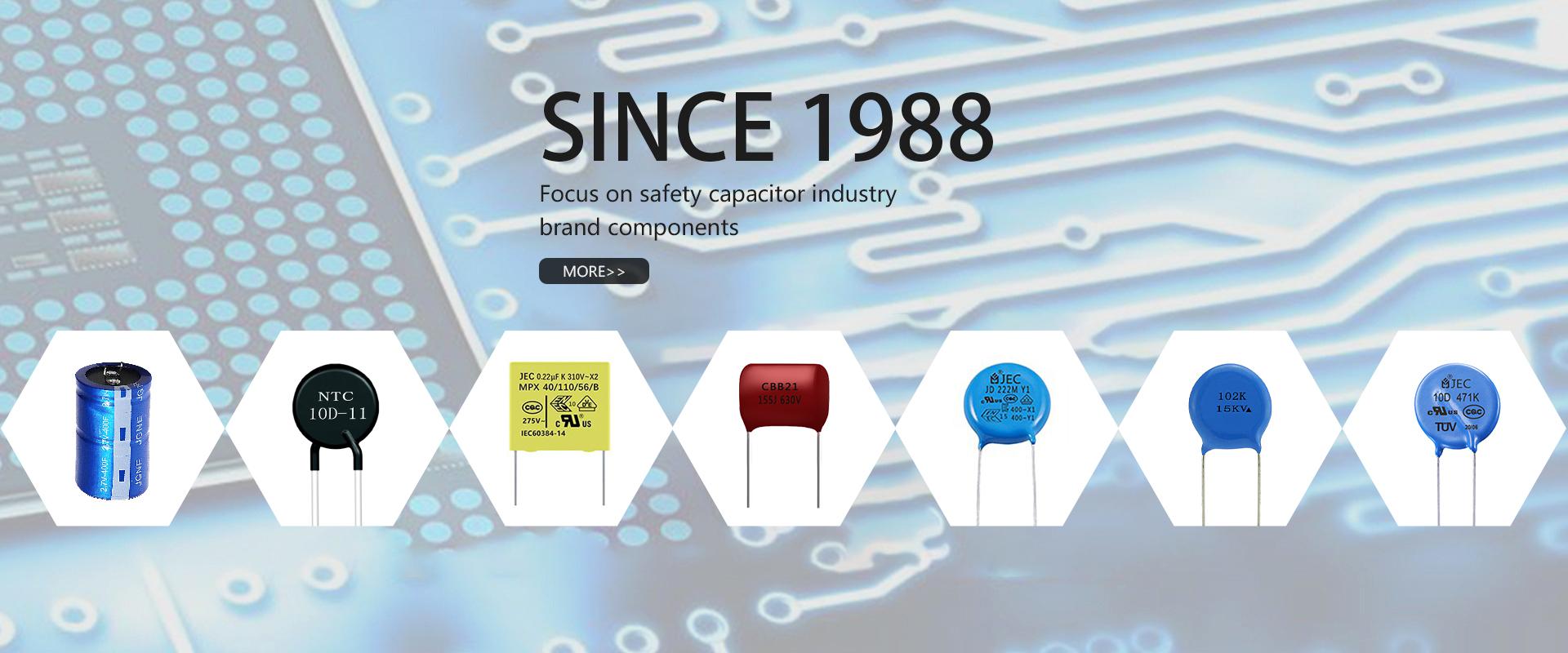
JEC is a professional manufacturer in China for more than 30 years. Our safety capacitors receive all safety certifications we mentioned above from industry powers. We have a strict quality control system, please be rest assured. So if you’re interested in our products, welcome to contact us, we’re here 24 hours online waiting for you. 

The Advantages of High Voltage Ceramic Capacitors compared with film capacitor

2021年1月18日 星期一

What Is a Varistor?

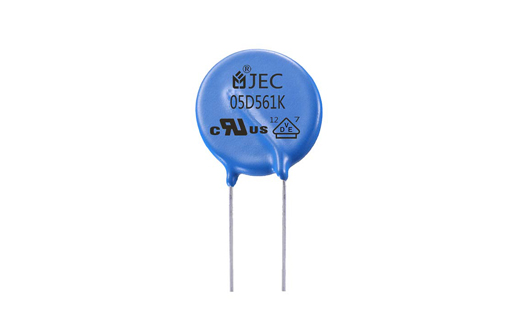
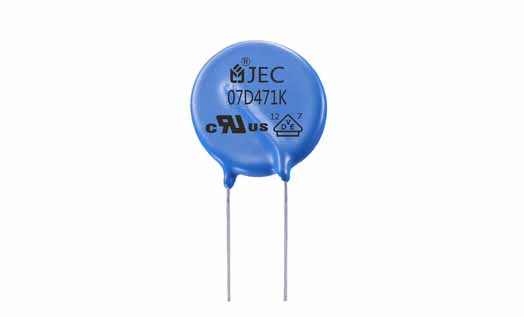
 A "varistor" is a resistance device with non-linear volt-ampere characteristics. It is mainly used to clamp the voltage when the circuit is subjected to overvoltage and absorb excess current to protect sensitive devices. The resistor body material of the varistor is a semiconductor, which is a voltage-limiting protection device. Using the non-linear characteristics of the varistor, when an overvoltage occurs between the two poles of the varistor, the varistor can clamp the voltage to a relatively fixed voltage value, thereby realizing the protection of the subsequent circuit. The main parameters of the varistor are varistor voltage, current capacity, junction capacitance, response time, etc.

Varistor

1.Working principle of the varistor

When the voltage applied to the varistor is lower than its threshold, the current flowing through it is extremely small, which is equivalent to a resistor with infinite resistance. In other words, when the voltage applied to it is lower than its threshold, it is equivalent to an off-state switch.

When the voltage applied to the varistor exceeds its threshold, the current flowing through it increases sharply, which is equivalent to a resistor with infinite resistance. In other words, when the voltage applied to it is higher than its threshold, it is equivalent to a closed switch

2.Precautions for varistor

(1) It must be ensured that the continuous working voltage will not exceed the maximum allowable value when the voltage fluctuation is the largest, otherwise the service life of the varistor will be shortened;

(2) When a varistor is used between the power line and the ground, sometimes the voltage between the line and the ground rises due to poor grounding. Therefore, a varistor with a higher nominal voltage than the line-to-line use is usually used.

The failure mode of the varistor is usually a short circuit. In order to prevent the failure of the varistor from causing a short circuit of the power supply and catching fire, a temperature fuse or thermal release mechanism can be connected in series with each varistor. The temperature fuse should have a good thermal coupling with the varistor. When the varistor fails (high impedance short circuit), the heat generated by it will fuse the temperature fuse, thereby separating the failed varistor from the circuit and ensuring the equipment Security. When a higher power frequency temporary overvoltage acts on the varistor, it may cause the varistor to break down and short-circuit (low impedance short circuit) instantaneously, and the temperature fuse is too late to fuse, or it may catch fire. In order to avoid this phenomenon, an impact-resistant power frequency fuse can be connected in series with each varistor (single-use power frequency fuse may not blow when aging failure). The varistor can also be used in series with the ceramic gas discharge tube. The ceramic gas discharge tube does not conduct during normal operation, and the varistor has no leakage current, which can greatly extend the service life; when it is impacted by a surge, the ceramic gas discharge tube is the first to hit Then, the surge voltage is limited by the varistor. The total residual voltage is the sum of the two, which increases slightly (tens of volts); after the impact, the discharge tube cannot maintain conduction due to the varistor limiting the current The arc is extinguished and the normal working state is restored; when the varistor fails in a short circuit, the ceramic gas discharge tube will quickly fail due to the large power frequency current flowing through the ceramic gas discharge tube, but most of its failure modes are open circuits, so it is not easy to cause a fire.

We are varistor suppliers. Please feel free to contact us.

2021年1月7日 星期四

Varistor


What is a varistor?

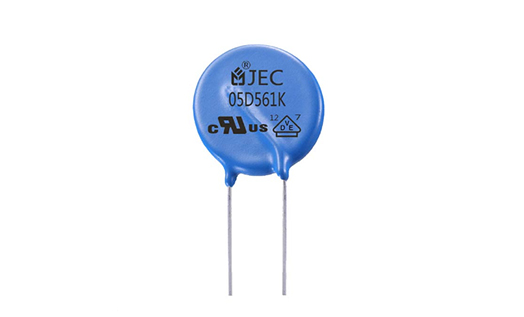
varistor is a voltage-dependent resistor(VDR). The resistance of a varistor is variable and depends on the voltage applied. The word is derived from the "variable resistor. As the voltage increases, their resistance decreases. If the voltage is too high, its resistance will drop sharply. This behavior makes them suitable for protecting circuits during surges. The causes of the surge may include lightning and electrostatic discharge. The most common type of VDR is metal oxide varistor or MOV.

Definition

The varistor is a nonlinear binary semiconductor whose resistance decreases with the increase of voltage. Voltage-dependent resistors are commonly used as surge suppressors for sensitive circuits.

Characteristics

A resistor having a nonlinear change, depending on the voltage applied. Under nominal load conditions, the impedance is very high, but when the voltage threshold (the breakdown voltage) is exceeded, the impedance drops sharply to a low value. They are usually used to protect circuits from excessive transient voltages. When the circuit is exposed to high voltage transients, the varistor initiates conduction and the transient voltage clamp is brought to a safe level. The energy from the incoming surge is partially transmitted and partially absorbed, thereby protecting the circuit.

Varistor


The most common type is MOV or metal oxide varistor. They consist of sintered substrates of zinc oxide (ZnO) grains. Grain boundaries provide PN junction semiconductor characteristics, similar to diode junctions. The matrix of randomly oriented grains can be compared with large diode networks in series and parallel. When a low voltage is applied, the current due to the reverse leakage through the junction is very small. However, when a high voltage is applied that exceeds the breakdown voltage, an avalanche breakdown occurs and a large current flows through the junction. This behavior leads to nonlinear current-voltage characteristics.

The construction of the varistor

A varistor is formed when a crystal of silicon carbide or metal oxide is pressed into a ceramic material.

The material is then dried and sintered at a high temperature. The electrical properties of the equipment depend on the temperature and atmospheric conditions provided.

For good electrical contact, the contact point of the material is metalized with silver or copper. Then lead is then welded to the contact and the varistor is supplied and coded.

Application field

The nonlinear characteristics of varistors make them ideal for use as surge protectors. The source of high voltage transients may be an electrostatic or inductive discharge from a motor or transformer, such as a lightning strike. For example, they are commonly used for surge protectors on power panels. A special type of low capacitance protects communication lines. These VDRS are available for a variety of applications, including:

Telephone and other communication line protection

Transient suppression of radio communication equipment

Surge protector power panel

Surge protector for the cable TV system

Power protection

Microprocessor protection

Electronic equipment protection

Low-pressure plate level protection

Transient voltage surge suppressor (TVSS)

Automobile electronic protection

Industrial high energy exchange protection

Advantages of varistor

It provides excellent overpressure protection.

Because it does not show polarity effects, it is easy to achieve bidirectionally.

Disadvantages of varistor

This is expensive equipment.

We are Varistor Suppliers. Please feel free to contact us.

2020年12月25日 星期五

Metal Oxide Varistor, MOV: Voltage Dependent Resistance

 Metal oxide varistors are used for transient protection of electronic circuits.

A varistor can be considered a form of resistance, where the resistance changes significantly with the applied voltage. The most common types of varistors use metal oxides, so they are often referred to as metal oxide varistors or MOVs for short.

Considering that their resistance depends on the applied voltage, they can also be referred to as voltage-dependent resistors.

Their more familiar name varistor comes from the fact that these components are "variable-resistors", that is, the varistor is an acronym for two words.


Varistor symbol


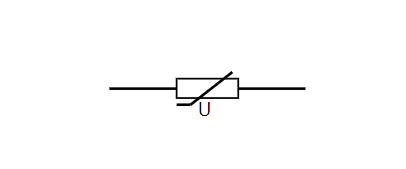
You can see that the varistor circuit symbol is very similar to the thermistor. It consists of a rectangular basic resistor symbol with a rectangle that crosses the diagonal and a small additional cross-section parallel to the body of the resistor symbol. This shows the non-linear characteristics of the varistor.

Varistor Circuit Symbol

Varistor Circuit Symbol

Although some other symbols may sometimes be used, the symbols shown are the most widely used and have been maintained under common standards.


Basic knowledge of varistor


The key characteristic of a mov varistor is that when a low voltage is applied across the varistor, it has a higher resistance, and for a higher voltage, the varistor will drop. Cause the varistor to conduct. As a result, they can be used for surge protection.

Select the varistor so that it does not conduct to the normally applied voltage, but select its conduction voltage so that the device starts to conduct above the normally applied voltage. In this way, any large transient voltage will be short-circuited and dissipated, thereby protecting the device.

There are two main varistor variants:

  • Ceramic/metal oxide varistor: This form of a varistor is the most widely used and is a form often mentioned when the term "varistor" is stated. Varistors are bidirectional, based on ceramics or metal oxides. As a result, this form of device is often referred to as a metal oxide varistor or MOV.

  • Diode varistor: This type of structure uses the characteristics of a diode to provide variable resistance. If only a single diode is used, it only works in one direction, but back-to-back diodes are used to provide bidirectional variable resistance characteristics. When an ordinary diode is used for protection, it is usually not called a varistor.


Varistor operation


Varistors are used in many fields and are usually used for surge protection across the line to be protected or in many areas from the line to the ground. Under normal conditions, they consume very little current, but when there is a surge, the voltage will rise above the knee or above the clamp voltage and will absorb the current, thereby eliminating the surge and protecting the equipment. The actual surge is absorbed by the varistor and part of it is taken away.

Metal oxide and silicon carbide varistors work because of the grain boundaries between the grains of the material act as small PN junctions. The whole assembly is like a large number of small diodes in series and parallel. When a low voltage is applied, since the junction is reverse biased and the only current is leakage current, current rarely flows. When a surge exceeding the clamping voltage appears across the device, the diode will undergo an avalanche breakdown, and a large current can flow through the device.

Varistors are only suitable for short-term pulses, not for continuous surges. Their size limits the power they can dissipate. Exceeding the rated time or voltage may cause the equipment to burn out, or in extreme cases, they may explode when the energy that needs to be dissipated is too high. Therefore, it is very important to operate them within the rated range.

It should also be noted that a metal oxide varistor (MOV) subjected to repeated surges may slightly change its performance and reduce its performance. After they experience a surge, the clamping voltage will drop a bit, which will eventually cause its damage.

Due to this failure mode, the MOV is usually connected in series with a thermal switch/fuse, and if too much current is consumed, the switch will activate.

mov varistor

MOV Varistor

Varistor specifications


When choosing a varistor for a given application, many parameters need to be considered. Some key move electronics specifications are listed below:

  • Clamping voltage: The varistor starts to show a voltage that is clearly turned on.

  • Rated voltage: This voltage (expressed as AC or DC) is the maximum voltage at which the device can be used. It is usually best to have a good margin between the rated voltage and the operating voltage, although this needs to be balanced with the clamping voltage and the required protection level.

  • Peak current: This is the maximum current that the device can handle. It can be expressed as the current at a given time.

  • Maximum pulse energy: This is the maximum pulse energy that the device can dissipate, in joules. The rated energy of a varistor is usually defined using standardized transients. Transients are expressed in x/y format, where x is the time for the transient to rise and y is the time to reach half of its peak value. Typical formats are 8/20 and 10/1000.

  • Response time: This is the time when the varistor starts to conduct after the pulse is applied. In many cases, this is not a problem. The typical value is sub 100nS.

  • Capacitance: The metal oxide varistor has a relatively high capacitance in the entire device. Although this may not be a problem for low-frequency applications, when it is used with data-carrying lines, etc., problems may arise. Therefore, it is necessary to check the capacitance value across the device of any circuit that may cause noise. problem. Although a low capacitance version can be used, the capacitance level of a typical metal oxide varistor may be between 100 and 1000 pF.

  • Standby current: The standby current is the current level drawn by the varistor when it is lower than the clamping voltage. Generally, this current will be specified at a given operating voltage across the device.


Varistor applications


Typical areas where varistors are used include:

  • Surge protection power adapter and power strip

  • Telephone and other communication lines

  • Power supply-the power supply usually connected to the main power cord

  • General electronic equipment protection

  • Automotive Electronics-Automotive electronics are notorious for having many spikes on power lines

  • Industrial high-energy AC line protection

Varistors are also used as microwave mixers in some cases for modulation, detection, and frequency conversion, although this is not a standard application.

Varistors can provide important protection for electronic circuits that may be affected by pulses and voltage spikes. They can transfer energy to the ground to protect equipment. These varistors are used in many projects, such as surge protection main sockets. They are used to protect computers and other equipment that may be affected by power surges and spikes.


 The Role of Film Capacitors in Filtering Circuits There are many types and models of capacitors, and film capacitors are one of the them. F...