2020年11月18日 星期三

How to Measure the Quality of the Thermistor?

 Due to the unique performance of semiconductor thermistors, it can not only be used as measuring components (such as measuring temperature, flow, liquid level, etc.), but also as control components (such as thermal switches, current limiters) and circuit compensation element. Thermistors are widely used in various fields such as household appliances, electric power industry, communications, military science, aerospace, etc., and their development prospects are extremely broad.

When testing the thermistor, first test its resistance in an indoor environment, and then hold the product with your hand to test to see if its resistance becomes smaller. If it changes, it means normal, otherwise, it is abnormal. Note: Special instruments should be used for accurate measurement during testing. The following thermistor China supplier introduces some measurement methods.

1. Room temperature detection

Set the multimeter to the resistance file, and the two meters touch the two pins of the thermistor. The reading of the multimeter is the resistance value of the thermistor under test at room temperature. On the premise of correct selection of the resistance file, if the reading is o or infinity, it means that the thermistor has been damaged.

2. High-temperature detection

Use an electric soldering iron as a heat source close to the thermistor. If the resistance displayed by the multimeter changes significantly from the resistance at room temperature, remove the soldering iron and the negative value will return to the negative value at room temperature, indicating that the thermistor is good.

3. Low-temperature detection

Clamp the two pins of the thermistor with a multimeter clamp, and put the thermistor into the refrigerator. Normally, the negative value displayed by the thermistor with a negative temperature coefficient is significantly larger than the negative value at room temperature; for the thermal resistance with a positive temperature coefficient, the resistance value displayed by the multimeter is significantly lower than the negative value at room temperature.

4. Heating method

Connect the two lead wires of the thermistor with the resistance gear of a multimeter, and then use a hot electric soldering iron (20W is fine) to heat the thermistor (close to the thermistor). For the PTC type thermistor, as the temperature increases, the resistance value should increase; for the NTC type thermistor, as the temperature increases, the resistance value should decrease. If the thermistor is heated, its resistance does not change, indicating that the thermistor is damaged.

5. Multimeter measurement method

Positive temperature coefficient thermistor (PTC) detection
Thermistor

Thermistor

When testing, the multimeter is adjusted to R×1 gear, which can be divided into two steps:

(1) Normal temperature detection (indoor temperature is close to 25℃): The actual resistance value of the two pins of the PTC thermistor is measured by touching the two test leads to the two pins of the PTC thermistor, and compared with the nominal resistance value. The difference between the two is within ±2Ω. normal. If the actual resistance value differs too much from the nominal resistance value, it means that its performance is poor or damaged.

(2) Heating test: On the basis of the normal temperature test, the second step of the test—heating test can be carried out. Put a heat source (such as electric soldering iron) close to the PTC thermistor to heat it, and monitor its resistance with a multimeter. Whether the value increases with the increase in temperature, if it is, it means that the thermistor is normal. If there is no change in the resistance value, it means that its performance has deteriorated and cannot be used continuously. Be careful not to put the heat source too close to the PTC thermistor or directly touch the thermistor to prevent it from being burned.

Negative temperature coefficient thermistor (NTC) detection

(1) Measuring the nominal resistance value Rt: The method of measuring NTC thermistor with a multimeter is the same as the method of measuring ordinary fixed resistance, that is, according to the nominal resistance of the NTC thermistor, selecting the appropriate electrical barrier can directly measure the Rt Actual value. But because NTC thermistor is very sensitive to temperature, the following points should be paid attention to when testing: ARt is measured by the manufacturer when the ambient temperature is 25℃, so when measuring Rt with a multimeter, the ambient temperature should be close to 25 It is carried out at ℃ to ensure the reliability of the test. B. The measured power must not exceed the specified value to avoid measurement errors caused by current heating effects. C pays attention to correct operation. During the test, do not pinch the thermistor body with your hands to prevent the body temperature from affecting the test.

(2) Estimate the temperature coefficient αt: the first measure the resistance value Rt1 at room temperature t1, and then use an electric soldering iron as a heat source, close to the thermistor Rt, measure the resistance value RT2, and use a thermometer to measure the thermistor RT at this time The average surface temperature t2 is then calculated.



2020年11月11日 星期三

Do You Really Understand Thermistors?

 The electronic devices in life are all equipped with thermistors, which saves us from overheating, and the number of thermistors used in in-vehicle devices is countless.

When the thermistor is used as a resistance element, due to the applied voltage and current heating, the resistance value will also change with the change of temperature. Utilizing the functions of heating elements and temperature elements, thermistors are active in various applications such as temperature sensors, circuit protection, temperature compensation, etc., and are used for products such as smartphones and wearable terminals for various electronic devices and in-vehicle devices. Comes with rich features and shapes.

According to the different effects of temperature on resistance changes, thermistors are divided into the following two types.

The negative temperature coefficient (NTC) thermistor is an electronic component whose resistance value decreases with increasing temperature. Suitable for various products. The material of the Negative Temperature Coefficient (NTC) thermistor is ceramic fired from oxides of manganese (Mn), nickel (Ni), and cobalt (Co). This ceramic forms the electrode. Its appearance shape generally has a lead type, chip type, and so on.

Negative temperature coefficient (NTC) thermistor, the resistance value will change with the temperature change of 3~5%/℃. Often used as a general temperature sensor in electronic equipment. For example, a smartphone uses a negative temperature coefficient (NTC) thermistor to measure the temperature inside the smartphone and then uses this temperature information to control the temperature.

NTC thermistor has a rich series lineup:

  • SMD type, high-reliability series and conductive adhesive compatible series for temperature detection, which can be used in vehicles;

  • Generally use resin encapsulation series;

  • Support soft lead type and lead type products for automotive equipment.

Thermistor Products

Thermistor Products

PTC thermistor

A positive temperature coefficient (PTC) thermistor is an electronic component that maintains a constant resistance value at room temperature. Once a certain temperature is exceeded, the resistance value will rise sharply. The resistance of the PTC thermistor increases with the increase of temperature, which can realize applications such as temperature detection and circuit current limiting.

The thermistor is made of ceramic materials with excellent reliability and performance. The complete product line not only covers different packaging forms (surface mount type, lead-through type), but also covers products for different applications, such as overcurrent protection, overheat protection, and surge current suppression applications.

PTC thermistor products are rich:

  • Generally resin-encapsulated type for heating;

  • SMD type supports overheat detection and overload current protection products for vehicle equipment;

  • There are lead-type products for overload current protection that support vehicle equipment.

Thermistor products are widely used. LED lights, mobile phones, computers, refrigerators, electronic thermometers, vacuum cleaners, and other electronic devices in life are all installed with thermistors, which prevents us from overheating. Troubled. The number of thermistors used in in-vehicle devices is even more numerous.


2020年11月3日 星期二

What Is the Difference Between Varistor Characteristics and Ordinary Resistors?

What Is the Difference Between Varistor Characteristics and Ordinary Resistors?cid=4

1. Introduction of Varistor

"Varistor" is a resistive device with non-linear volt-ampere characteristics. It is mainly used to clamp the voltage when the circuit is subjected to overvoltage and absorb excess current to protect sensitive devices.  The resistor body material of the varistor is a semiconductor, which is a voltage-limiting protection device.  Utilizing the non-linear characteristics of the varistor, when an overvoltage appears between the two poles of the varistor, the varistor can clamp the voltage to a relatively fixed voltage value, thereby realizing the protection of the subsequent circuit. The main parameters of varistor are varistor voltage, current capacity, junction capacitance, response time, etc.

2. Working principle of the varistor

When the voltage applied to the varistor is lower than its threshold value, the current flowing through it is extremely small, which is equivalent to a resistor with infinite resistance.  In other words, when the voltage applied to it is lower than its threshold, it is equivalent to an off-state switch.

When the voltage applied to the varistor exceeds its threshold, the current flowing through it increases sharply, which is equivalent to a resistor with infinite resistance.  In other words, when the voltage applied to it is higher than its threshold, it is equivalent to a closed switch.

3. Precautions for varistor

(1) It must be ensured that the continuous working voltage will not exceed the maximum allowable value when the voltage fluctuation is maximum, otherwise, the service life of the varistor will be shortened;

(2) When a varistor is used between the power line and the ground, sometimes the voltage between the line and the ground rises due to poor grounding. Therefore, a varistor with a higher nominal voltage than the line-to-line use is usually used.

4. Function of varistor

What is the use of varistor?  The biggest feature of a varistor generator is that when the voltage applied to it is lower than its threshold "UN", the current flowing through it is extremely small, which is equivalent to a closed valve. When it exceeds UN, its resistance value becomes smaller, so that the current flowing through it increases sharply and the impact on other circuits is not changed, thereby reducing the impact of overvoltage on subsequent sensitive circuits.  Using this function, you can suppress the abnormal overvoltage that often occurs in the circuit and protect the circuit from overvoltage damage.

5. Varistor application type

Different use occasions, the purpose of applying varistor, the voltage/current acting on the varistor should be different.

Therefore, the requirements for varistors are also different. It is very important to distinguish this difference for correct use.

According to different purposes, varistors can be divided into two categories:

① Varistor for protection

② Varistor for circuit function

6. Types of varistors

Surge suppression type: refers to a varistor used to suppress transient overvoltages such as lightning overvoltages and operating overvoltages. The occurrence of such transient overvoltages is random and non-periodic. The peak current and voltage may be very high. Most varistors fall into this category.

High-power type: refers to a varistor used to absorb continuous pulse groups that appear periodically, such as a varistor connected to a switching power converter, where the impulse voltage appears periodically, and the period is known, and the energy value can generally be calculated The peak value of the voltage is not large, but due to the high frequency of occurrence, its average power is quite large.

High-energy type: refers to a varistor used to absorb the magnetic energy in large inductance coils such as generator excitation coils and lifting electromagnet coils. For this type of application, the main technical index is energy absorption capacity.

The protection function of varistor can be repeated many times in most applications, but sometimes it is also made into a "one-time" protection device like a current fuse. For example, a varistor with short-circuit contacts connected in parallel to some current transformer loads.

7. The basic performance of varistor

(1) Protection characteristics. When the impact strength of the impact source does not exceed the specified value, the limit voltage of the varistor is not allowed to exceed the impact withstand voltage that the protected object can withstand.

( 2) Impact resistance characteristics, that is, the varistor itself should be able to withstand the specified impact current, impact energy, and average power when multiple impacts occur successively.

(3) There are two life characteristics: one is the continuous working voltage life, that is, the varistor should be able to work reliably for the specified time (hours) under the specified ambient temperature and system voltage conditions; the second is the impact life, that is, it can reliably Withstand the specified number of shocks.

(4) After the varistor intervenes in the system, in addition to the protection of the safety valve, it will also bring some additional effects, which is the so-called "secondary effect", which should not reduce the normal working performance of the system. There are three main factors to consider, one is the capacitance of the varistor itself (tens to tens of thousands of PF), the other is the leakage current under the system voltage, and the third is the coupling of the non-linear current of the varistor through the source impedance. Impact on other circuits.

8. Basic parameters of the varistor

Nominal varistor voltage (V)

Refers to the voltage value across the varistor when a pulse current with a specified duration (generally 1mA duration is generally less than 400mS) is passed.

Voltage ratio

This refers to the ratio of the voltage value generated when the current of the varistor is 1mA to the voltage value generated when the current of the varistor is 0.1mA.

Maximum limit voltage (V)

The peak value of the voltage across the varistor under the maximum pulse peak current Ip that the varistor can withstand and the specified waveform.

Residual pressure ratio

When the current through the varistor is a certain value, the voltage generated at its two ends is called the residual voltage of this current value. The residual voltage ratio is the ratio of the residual voltage to the nominal voltage.

Flow capacity (kA)

The flow capacity is also called the flow rate, which refers to the maximum pulse (peak) current value that is allowed to pass through the varistor under the specified conditions (specified time interval and number of times, applying standard impulse current).

Leakage current (mA)

Leakage current is also called waiting for current, which refers to the current flowing through the varistor under the specified temperature and maximum DC voltage.

Voltage temperature coefficient

Refers to the rate of change of the nominal voltage of the varistor within the specified temperature range (temperature 20°C~70°C), that is, when the current through the varistor remains constant and the temperature changes by 1°C, the varistor The relative change of the voltage across the device.

Current temperature coefficient

This refers to the relative change in the current flowing through the varistor when the temperature changes 1°C when the voltage across the varistor remains constant.

Voltage nonlinear coefficient

Refers to the ratio of the static resistance value to the dynamic resistance value of a varistor under a given applied voltage.

Insulation resistance: refers to the resistance value between the lead wire (pin) of the varistor and the insulating surface of the resistor.

Static capacitance (PF)

Refers to the inherent capacitance of the varistor itself.

rated power

Work for 1000 hours at a specific ambient temperature of 85°C to make the varistor voltage change less than 10% of the maximum power.

Maximum impact current (8/ 20us)

Impulse the varistor with a specific pulse current (8/20us waveform) once or twice (each interval of 5 minutes), so that the varistor voltage change is still within 10% of the maximum impulse current.

9. Operating principle of the varistor

The protection principle of the surge absorber: When the varistor is in the ready state, compared to the protected electronic component, it has a very high impedance (several megaohms) and will not affect the characteristics of the original design circuit.  But when an instantaneous surge voltage appears (when it exceeds the breakdown voltage of the surge absorber), the impedance of the surge absorber will become low (only a few ohms) and cause a short circuit. Therefore, electronic products or more expensive components  Be protected.

We are varistor wholesalers, if you are interested in our products, please feel free to contact us.


2020年10月26日 星期一

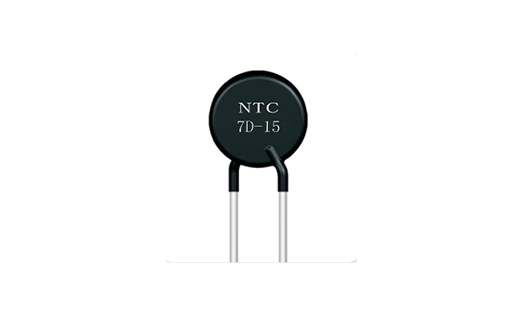
NTC Thermistor MF72 7D-15 thermistor china suppliers thermistor from factory thermistor china

 NTC Thermistor MF72 7D-15  thermistor china suppliers   thermistor from factory   thermistor china


Thermistor features:

1. Small size, high power, strong ability to suppress surge current

2. Fast reaction speed, large material constant (B value), small residual resistance

3. Long life, high reliability, full range, wide application range


high precision resistors Electrical characteristics:

Series

Zero Power Resistance at 25℃

B-value 25/50℃(K)

Operation Temperature Range

R25(Ω)

Bmin(K)

TL~TU(°C) (℃)

NTC

0.7~400

D5~D25

55~200


We Provide Precision Resistor and Buy Resistor, Our company has been committed to supply personalized product solutions to customers,please Consult Us.

If you want to know more industry information about resistors and capacitors, please click here.


https://www.jeccapacitor.com/thermistor/ntc-thermistor-mf72-7d-15.html

2020年10月18日 星期日

NTC Thermistor MF72 varistor wholesalers thermistor applications thermistor exporter

 NTC Thermistor MF72   varistor wholesalers   thermistor applications   thermistor exporter   thermistor manufacturers


thermistor products features:

1. High test accuracy, small size, fast response speed and stable work for a long time.

2. Good interchangeability and consistency, convenient for mass production.


Resistor Electrical characteristics:

Series

Zero Power Resistance at 25℃

B-value 25/50℃(K)

Operation Temperature Range

R25(Ω)

Bmin(K)

TL~TU(°C) (℃)

F52

0.1K~1KK

3100~4500

55~125


We Are Provide Safety Capacitor and Cheap Resistors and Resistor China, If You Need, Welcome To Contact Us To Know More.

If you want to know more industry information about resistors and capacitors, please click here.


https://www.jeccapacitor.com/


2020年10月10日 星期六

Varistor 07D471K varistor high quality varistor sell varistor wholesalers

Varistor 07D471K   varistor high quality  varistor sell    varistor wholesalers

Varistor  features:
1. Small size, absorb transient overvoltage, large surge current resistance. The voltage range is wide, range from several volts to thousands of volts for a single varistor.
2. Low limiting voltage (residual voltage), low leakage current, fast response speed (ns level), Front and back symmetrical volt-ampere characteristics, the flow rate of a single varistor can reach 70KA or higher.


Electrical characteristics:
Technical Data
Model Size
Ф5mm ~ Ф20mm
Operating/Storage Temperature
-40℃ ~ +85℃(+125℃ VDE)/-40℃ ~ +125℃
Withstanding Surge Current
100~6500A
Approved Monogram
UL ,VDE ,CSA ,CQC

Series
Maximun Allowable Voltage
Varistor Voltage
Maximun Clamping Voltage
AC rms(V)
DC(V)
Min.
Vb(Vdc)
Max.
Vc(V)
lp(A)
JNR
7~1000
9~1465
9.6~1620
12~1800
14,4~1980
25~2970
1~100

We Provide Precision Resistor and Buy Resistor, Our company has been committed to supply personalized product solutions to customers,please Consult Us.
If you want to know more industry information about resistors and capacitors, please click here.


2020年10月2日 星期五

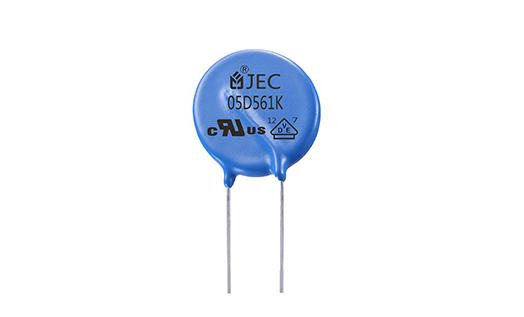
Varistor 05D561K cheap resistors varistor supplier varistor high quality

Varistor 05D561K   cheap resistors   varistor supplier   varistor high quality  varistor 05d561k manufacturer

varistor generator features:
1. Small size, absorb transient overvoltage, large surge current resistance. The voltage range is wide, range from several volts to thousands of volts for a single varistor.
2. Low limiting voltage (residual voltage), low leakage current, fast response speed (ns level), Front and back symmetrical volt-ampere characteristics, the flow rate of a single varistor can reach 70KA or higher.


Varistor Electrical characteristics:
Technical Data
Model Size
Ф5mm ~ Ф20mm
Operating/Storage Temperature
-40℃ ~ +85℃(+125℃ VDE)/-40℃ ~ +125℃
Withstanding Surge Current
100~6500A
Approved Monogram
UL ,VDE ,CSA ,CQC

Series
Maximun Allowable Voltage  
Varistor Voltage
Maximun Clamping Voltage    
AC rms(V)
DC(V)
Min.
Vb(Vdc)
Max.
Vc(V)
lp(A)
JNR
7~1000
9~1465
9.6~1620
12~1800
14,4~1980
25~2970
1~100

If You Are Finding Lighting Capacitor and High Density Capacitor and China Capacitor In China, We Will Be Your Best Choose! We Have Our Own Factory, So We Can Give You A Cheap Price!
If you want to know more industry information about resistors and capacitors, please click here.

 The Role of Film Capacitors in Filtering Circuits There are many types and models of capacitors, and film capacitors are one of the them. F...